If you are still moving pins around your map, buy T-money (티머니). The Climate Card (기후동행카드) makes more sense once the itinerary stops changing — and there is one restriction that decides the question before you even get to price.
Read the date on any advice you find
Seoul began retiring the Climate Card on 1 September 2026, replacing it with 기후동행패스 — the national 모두의카드 with Seoul benefits added. Prepaid 30-day cards could be topped up only until 31 August, and their last day of use was 29 September. Postpaid Climate Cards became ordinary transit cards on 1 October.
That matters because advice written for the 30-day card no longer applies to a visitor, who can no longer top one up. The short-term passes — 1, 2, 3, 5 and 7 days — continue. Those are the ones this page is about.
Where they work has shrunk. Seoul’s Korean information page now states the short-term pass’s scope as the current rule: Seoul-area subway, alighting at Incheon Airport Terminals 1 and 2, and Seoul-licensed city and town buses, night and circular buses included. Seoul’s Q&A lists Gimpo, Goyang, Gwacheon, Guri, Seongnam, Hanam and Namyangju, among others, as excluded from the short-term range. Seoul’s Korean information page and its dated Korean Q&A both state that this range applies from 1 October 2026. Plan every ride inside Seoul. Seoul’s FAQ schedule still words the scope as Seoul only, as scheduled to continue, and does not mention the airport; the information page and the Q&A name airport alighting, and this page follows them. Either way you still cannot board at Incheon.
The English policy page is out of step. The first source linked below, Seoul’s English Climate Card page, does not show this change and still lists Gyeonggi-area rail lines as covered. For the current limits, use Seoul’s Korean information page, the dated Korean Q&A, the station lookup or Seoul’s English release, all linked below.
Do not pick the Climate Pass. 기후동행패스 is the replacement for Seoul residents, and foreigners need a Foreign Resident Registration Number to sign up. A short-term visitor is unlikely to hold one. Seoul’s subway kiosks have sold it since 1 September, so if both appear on the screen, choose the short-term pass.
The comparison that actually decides it
| T-money | Climate Card short-term pass | |
|---|---|---|
| How you pay | Prepaid balance, fare charged per ride | Unlimited eligible rides for the period |
| Best fit | Open plans, or any travel outside Seoul | Transit-heavy days inside the covered network |
| Arriving at Incheon | Works on the AREX All-Stop | Cannot board at T1 or T2 |
| What to watch | Remaining balance | Coverage boundary and calendar-day expiry |
T-money is not exciting, which is most of its appeal. Load a modest balance and tap in at every boarding. Tapping out is where the subway and the bus differ, so take them separately. To see what a particular subway trip costs on a transport card, use the Seoul subway fare calculator, which also names where its result can differ from the gate.

A T-money card, as shown on the operator’s website. Image: Tmoney Co., Ltd., pay.tmoney.co.kr.
Subway: tap out every time, because a missed tap-out now costs money. From the first train on 7 March 2026, a prepaid or postpaid transport card that rode only on metropolitan-area urban rail and was not tapped out is charged an extra base fare automatically the next time it is used to board: ₩1,550 for an adult, ₩900 for a youth and ₩550 for a child. Seoul’s article names prepaid and postpaid transport cards rather than T-money by brand; a T-money card is a prepaid transport card. Commuter passes, single-journey tickets and concession tickets are excluded. The charge applies across the whole metropolitan-area urban rail network, not only Seoul Metro’s own lines. Seoul’s stated reason is that without a tap-out the system cannot tell how far you went. The amounts are the base fares in that article, so they move if the base fare does, and the article does not say whether boarding a bus collects the charge.
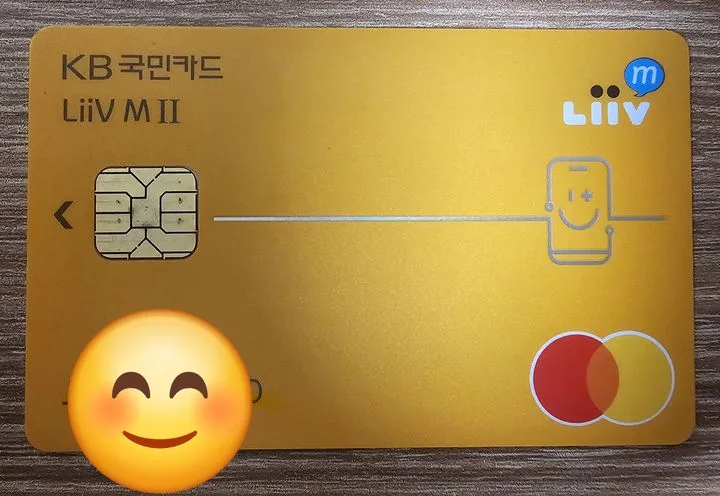
Front of a KB Kookmin Card Liiv M II postpaid card. Photograph by the author.
Bus: tap out to keep your transfer. Seoul’s transfer page tells riders to tap at every boarding and exit. A missed tap-out ends the transfer, and the next vehicle then collects the base fare that was left unpaid. Seoul’s own Q&A from 2012 says a Seoul city bus ridden alone needs no tap-off and costs the base fare whatever the distance. The transfer page gives the reason for tapping at every boarding and exit as calculating the distance surcharge. That Q&A is old and predates the subway rule, and the current transfer page still says to tap out, so tap out of every bus. Distance-based buses in Gyeonggi and Incheon carry a penalty for a missed tap-off, according to Seoul’s article. It gives no amount, so this page gives none.
What makes T-money the safer default is not price but the airport rule. It works on the AREX All-Stop, where the Climate Card cannot board at the terminals. The Climate Card’s own exclusions are listed further down.
The airport rule that settles it for most people
Seoul’s Korean information page names no AREX segment. It states the scope as the Seoul-area subway plus alighting at Incheon Airport Terminal 1 and Terminal 2, and Seoul’s English release adds that the pass can be used at Gimpo Airport Station in Seoul.
You may exit at Incheon Airport Terminal 1 or Terminal 2 after boarding somewhere inside the covered area. You may not board at either terminal. Seoul’s own page puts it plainly: you cannot take the train at T1 and T2.
So at Incheon the pass cannot be the card you arrive on. Whatever else you decide, the ride out of the airport is a separate purchase — a tapped T-money on the All-Stop, or an Express ticket. On a transit card the All-Stop costs ₩4,750 from Terminal 1 to Seoul Station and ₩4,650 to Hongik University; from Terminal 2 it is ₩5,350 and ₩5,250. The airport transfer guide covers that decision properly.
If you need a card at the airport, the card operator’s page for foreign visitors lists the Tmoney Travel Card at ₩4,000, sold at convenience stores and, on its Korean page, at the staffed bus ticket office in Incheon Airport; its English page drops “staffed”. It names no terminal and no store, so I can’t tell you which airport convenience store stocks it. That ₩4,000 has nothing to do with the Climate Pass card’s ₩4,000 mentioned below.
Do not buy the pass expecting it to cover the ride in from the airport. It does not.
What a short-term pass costs
| Pass | Price |
|---|---|
| 1 day | ₩5,000 |
| 2 days | ₩8,000 |
| 3 days | ₩10,000 |
| 5 days | ₩15,000 |
| 7 days | ₩20,000 |
A reusable physical card is a further ₩3,000, bought separately; Seoul’s English policy page and the card operator’s short-term-pass rows both give that price. On a two-day trip, the card added to the ₩8,000 pass is more than a quarter of what you spend, which is worth noticing before you decide. The ₩4,000 card in Seoul’s August release is the Climate Pass card, a different product from the one you are buying. Count the ₩3,000 in your total.
Validity runs by calendar day, not by 24 hours. In the city’s Korean wording, a pass runs from the first train on your start date — 04:00 — to the last service on the end date, which is roughly 04:00 the following morning. A one-day pass activated at three in the afternoon still expires with that night’s last train. Start it in the morning or do not start it that day.
What the pass includes, and where it stops
Included: Seoul-area subway, Seoul-licensed city and town buses, and alighting at Incheon Airport Terminals 1 and 2.
Not included: Ttareungi public bikes and the Hangang Bus. Seoul’s English page still lists both under the card’s general service range, but its note across the short-term rows reads “Ttareungi and Hangang Bus not included”, and the Korean page says the same (따릉이, 한강버스 미포함). The 30-day tiers ended with their last day of use on 29 September. The Korean page no longer lists them or names Ttareungi in its general range; the English page still does. An earlier version of this page had this backwards. A riverside bike ride or a Hangang Bus trip is not covered, so leave it out of the pass arithmetic.
Excluded: the Sinbundang Line, GTX, subway outside Seoul, intercity and airport buses, and any bus licensed outside Seoul.
That exclusion list is longer than it looks. “Subway outside Seoul” covers a good deal of what a visitor might reach on a day trip, and “buses licensed outside Seoul” is not something you can tell by looking at the bus. A route that appears in your map app as a normal city bus can be a Gyeonggi-licensed one, and the pass will not carry you on it.
The boundary matters more than the price. Whatever the pass saves you stops being a saving the first time you are stopped at a gate, or find your route runs on a Gyeonggi-licensed bus. Check your actual planned routes against that list in NAVER Map before buying, not after.
Foreign cards work, but carry a fallback
Seoul has installed card vending machines across subway stations, and since 17 March 2026 Climate Cards can be bought and recharged with international credit and debit cards — on the 440 new machines at 273 stations across Seoul Metro Lines 1 to 8. The physical card is also sold at convenience stores near Seoul subway stations. The card operator’s sale table names no sale point at Incheon Airport, so buy the Climate Card in Seoul rather than counting on the airport.
Two Seoul pages disagree on that date. The city’s English Climate Card page puts it in March 2025; the city’s own Korean press release puts it at 17 March 2026 and describes the service as being introduced then. This page follows the Korean release.
The card operator, Tmoney, adds its own caution on its Climate Card page: foreign-issued credit and debit cards may be restricted or carry a separate fee.
Carry a second card and a small amount of Korean won rather than arriving with a plan that depends on one machine accepting one card.
What I would actually do
Take T-money for a first visit with open plans, day trips, or travel to another city. Move to a short-term Climate Card only when your mapped Seoul rides clearly justify it and every important route falls inside coverage.
I am not going to give you a break-even number of rides, because Seoul does not publish one and anything I invented would depend on distances I do not know. Map a real day instead. A palace in the morning, lunch across town, sunset at the river and a late market can make unlimited rides pay. Spending most of the day walking around Seongsu will not.
Here is the sequence I would use. Put your three or four planned days into a map app as actual routes, not the plan in your head. Count how many of those rides fall inside the coverage list above, and leave any Ttareungi or Hangang Bus ride out of the count. A day that runs like the palace-lunch-river-market day above — one covered ride after another — earns a pass its ₩5,000. A day that looks like wandering Seongsu on foot does not, however many hours you are out. Judge the shape of the day against those two pictures rather than counting toward a ride number Seoul has never published.
Then add the ₩3,000 card on top, once, and check whether the total still wins. On a short trip the card is a large share of the spend.
And if you are arriving at Incheon, remember that this decision and your airport transfer are the same decision — the Climate Card cannot board AREX at the airport, so you need T-money or a separate ticket either way.
The small saving is not worth designing a holiday around a transit card.